
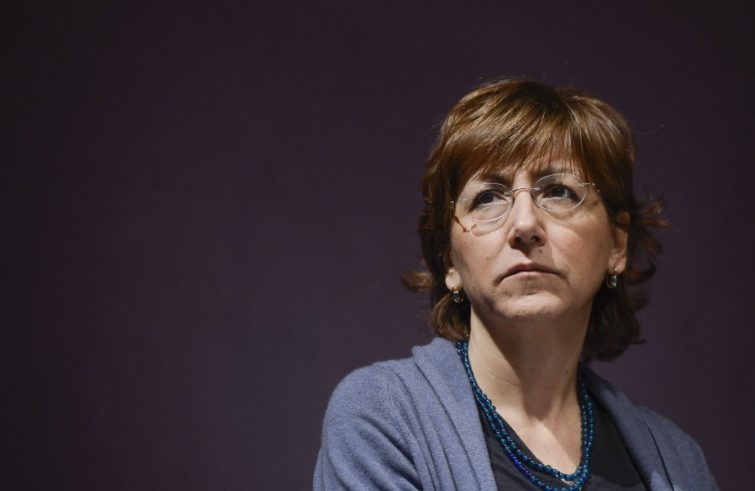
“I would not speak of failure. We probably need to change the way we communicate what happened during the Second World War”, said Milena Santerini of the Catholic University of Milan, Vice-President of the Shoah Memorial in Milan, who from 2020 to 2022 served as National Coordinator for the fight against antisemitism. Her words come on Holocaust Remembrance Day, when the world pauses to remember the victims of the Shoah and all those persecuted by the Nazi regime and its allies during the Second World War. Commemorations are being held at the headquarters of the major international organisations, from New York to Geneva at the United Nations, and in European capitals. “We must help people understand”, Ms Santerini adds, “that this is not merely a commemoration or remembrance of past victims, but a condemnation of phenomena of racism, injustice and discrimination that could happen again.
Perhaps this is what needs to change: memory must become a living warning, capable of speaking to the present”.
In Italy, the heart of the institutional commemorations will take place at the Quirinal Palace, where the President of the Republic, Sergio Mattarella, will welcome the highest state officials.
Professor, in what climate are we marking Remembrance Day this year? Unfortunately, the picture is not positive…
The climate is difficult because after 7 October, that is, after the horrific terrorist attack by Hamas, and following the conflict in Gaza, many impulses have resurfaced in society, which we could describe as genuine manifestations of antisemitism. These trends end up putting memory itself in crisis: they relativise it, trivialise it, and overlap past and present, to the point of claiming that “others are doing today what they suffered yesterday”. In this way, unacceptable equations are created between the actions of the Israeli government — which everyone is obviously entitled to criticise or condemn — and Jews in general.
This is a dangerous overlap that fuels acts of antisemitism and even reduces the willingness to safeguard and cultivate memory.
Indeed, after 7 October, nothing has been easy, and everything almost seems to have rewound into a dark past. From 2020 to 2022, you served as National Coordinator for the fight against antisemitism and have always been committed on this front. How do you experience this resurgence of antisemitism in Italy today? Do you feel a sense of failure?
Absolutely not. The “cause”, so to speak, is to preserve the memory of what happened, to give a voice to the witnesses of the profound injustice they experienced in their own lives, such as exclusion, discrimination, deportation and then extermination, solely because they were part of an entire human group which, in the intentions of the persecutors, should not have continued to exist on the face of the earth. It is a cause that serves civil society and safeguards our democracy.
It is a cause of humanity. It means affirming that there are no first- and second-class people, that no one can be deprived of the right to live, that there are no “inferior” groups.
Memory is indispensable; it is part of our moral conscience. Yet I look with great concern at the fact that today there are far fewer public events, fewer visits to remembrance sites, and less sensitivity to what happened back then. This overlap between current events and the past is, of course, deeply alarming. I would not, however, call it a failure. We probably need to change the way we communicate what happened during the Second World War. We must help people understand that this is not merely a commemoration or remembrance of past victims, but a condemnation of phenomena of racism, injustice and discrimination that could happen again. Perhaps this is what needs to change: memory must become a living warning, capable of speaking to the present.
Current events, unfortunately, do not help: the news coming from Israel does not favour the cause of fraternity with the Jewish people. How can a wound that still throbs so intensely be overcome and healed?
We must make distinctions. The simplification that places the actions of a government and the entire Jewish people on the same level is already, in itself, a significant part of the problem. Identifying all Jews with Israel’s political decisions is the beginning of a clear discriminatory position. We can and must preserve memory; we can and must say “never again” starting from those events, and at the same time denounce violations of international law that occur— and have occurred — in Gaza.
What can the Shoah say today to a world that, unfortunately, seems once again to be rewinding into the past? What can the Jewish world say to the conscience of humanity?
After the war, the Jewish world — despite everything it had endured — was at the forefront in the defence of universal rights: in the struggle against apartheid, against the death penalty, against racism in the United States. The message it conveys to us is clear: deporting migrants, as is happening in Trump’s America, is unacceptable; criminalising solidarity with refugees, as happens in the Mediterranean, is unacceptable. The Shoah calls on us to keep alive the awareness that we all have the same value. And it is distressing to see that, despite the lessons that the Jewish world — and all of us — have learned by building institutions such as the United Nations or the European Union, these principles are now being called into question.
Yet I do hope that we will have the democratic antibodies to respond. And in this, the memory of the Shoah can still help us.