
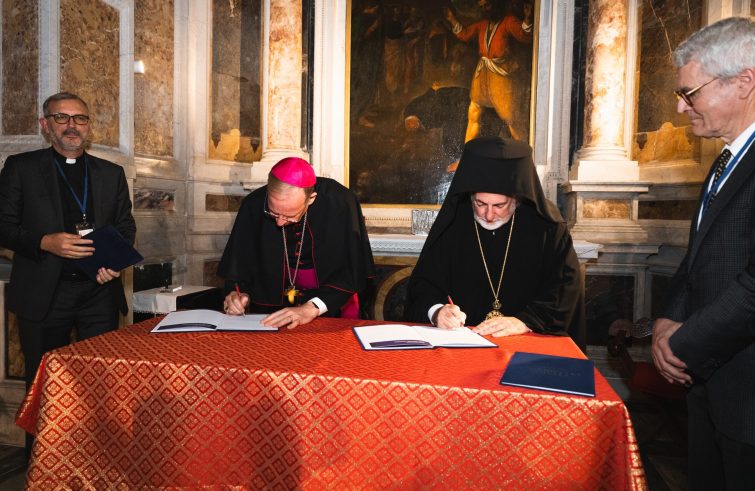
With a “historic step towards Christian unity” the updated Charta Oecumenica (“Ecumenical Charter”) was presented on 5 November in Rome at the at the Church of the Martyrdom of Saint Paul (Abbey of the Three Fountains, by the Council of European Bishops’ Conferences (CEE) and the Conference of European Churches (CEC). The result of “a lengthy and meticulous revision process that began in 2022”, this joint document – write the two representatives of the two European bodies in a statement – “marks a milestone in the ecumenical journey of European churches, renewing their commitment to walk together in dialogue, mutual understanding, and shared witness in response to the challenges of our time. The updated Charta was signed by Archbishop Nikitas of Thyateira and Great Britain, President of CEC, and Msgr. Gintaras Grušas, Archbishop of Vilnius and President of CCEE. Together, they renewed their commitment “to continue building bridges between churches in Europe.”
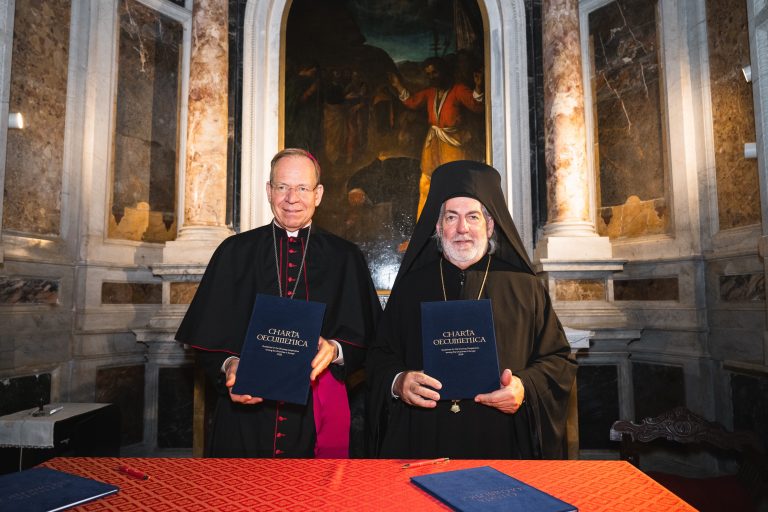
“This Charta Œcumenica is a call to conscience and cooperation,” said Archbishop Nikitas. “Our commitment to one another as churches is not abstract—it is grounded in shared faith, lived out amid pain, division, and hope. In a fragmented and secular Europe, the Charta urges us to rediscover the strength of our communion and the urgency of our mission.”
“We must proclaim the Gospel together, uphold human dignity, and work side by side for justice, peace, and care for creation. This is our ecumenical vocation—not just to speak of unity, but to live it.”
Archbishop Grušas emphasised that the updated Charta comes at a crucial time in Europe’s journey. “Our churches are called to be signs of unity and hope—not only in words but in action. This Charta equips us to respond together to the wounds of war, displacement, and the ethical challenges of new technologies It reminds us to walk humbly, confront past failings, and create spaces of healing and reconciliation. It also calls us to listen to the voices of young people and involve them in shaping the path ahead. We are stronger when we stand together.”
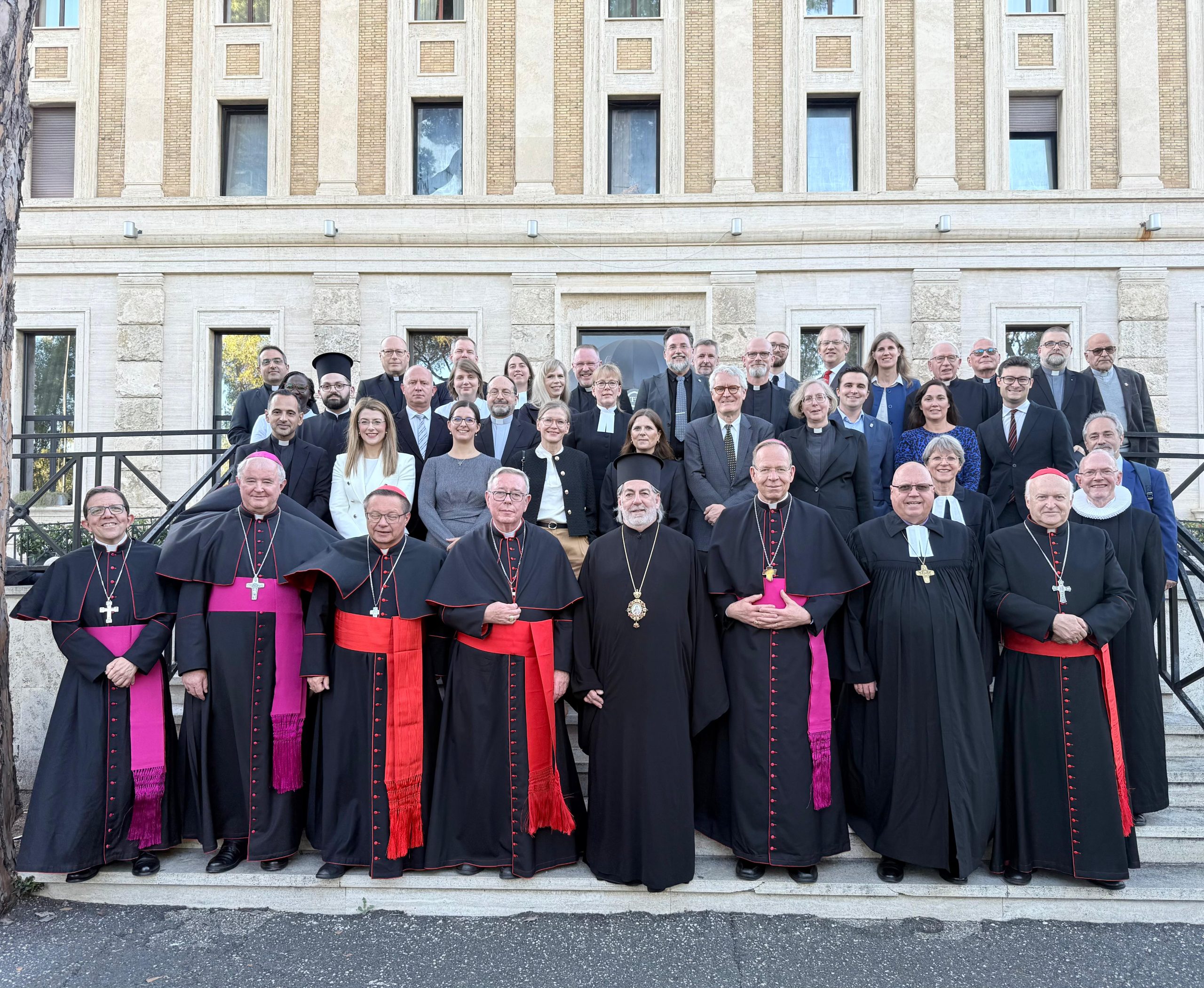
The document addresses the pressing needs of today’s world, including the pursuit of peace and reconciliation, the embrace of migrants and refugees, the urgent call to safeguard creation, and the deepening of relationships with Jewish and Muslim communities. Originally signed in 2001in Strasbourg, the revised version of the Charta reflects the evolving social, spiritual, and ecological landscape of Europe and beyond.
“While it carries no legal or doctrinal authority, its strength lies in the moral and spiritual commitment of churches to receive and implement it freely and contextually.”
The document is divided into four sections: the first is entitled “We believe in ‘One Holy Catholic and Apostolic Church’ – Called together to unity in faith”. The second is entitled ‘‘On the way towards the visible unity of the churches’’, in which Christians of all Churches are invited to “move towards one another”; “Witness together”, “Continuing in dialogue and acting together” and, above all, to give space to “youth in the Churches and in ecumenism.” The third secrion addresses the various ‘Spheres of encounter in Europe‘, urging the Churches to ‘“participate in the building of Europe in a changing world”’, to ‘’strengthening relations with Jews and Judaism”, “Muslims and Islam”, and to “engage with other religions and world views.” The fourth paragraph outlines the various “Fields of Shared Responsibility and Engagement in Europe”: striving for peace and reconciliation, safeguarding creation, supporting migrants, refugees and displaced persons, and engaging with new technologies.
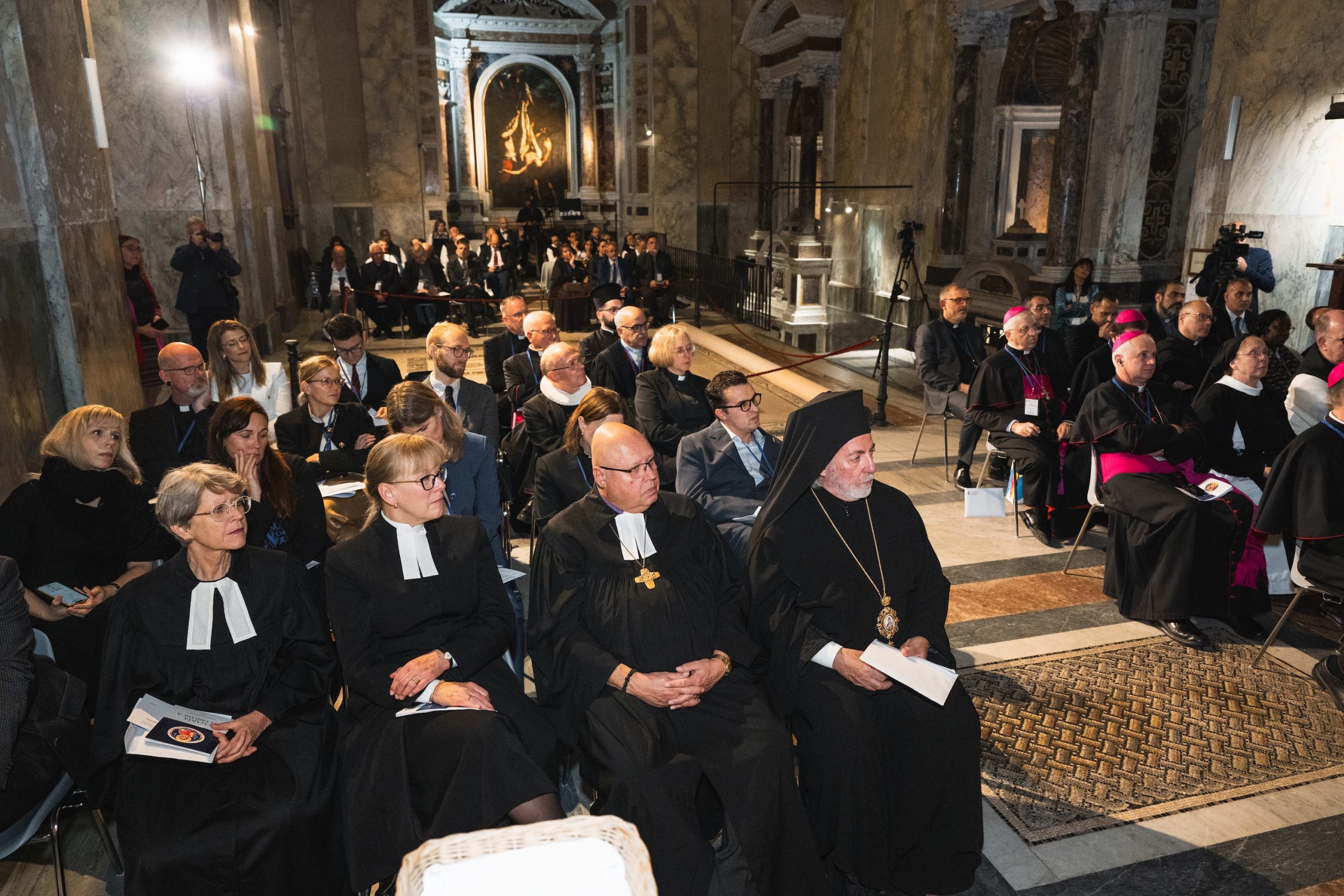
“A central focus throughout – write CEC and CCEE in the statement – is the commitment to offer a united Christian voice in the public sphere—one grounded in compassion, justice, and shared responsibility for the future of Europe.” “With a spirit of humility and hope – they add – the updated Charta does not shy away from confronting past wounds and institutional failings. Instead, it offers a renewed call to healing, accountability, and transformation, urging Christians to live their unity through concrete action and witness.”