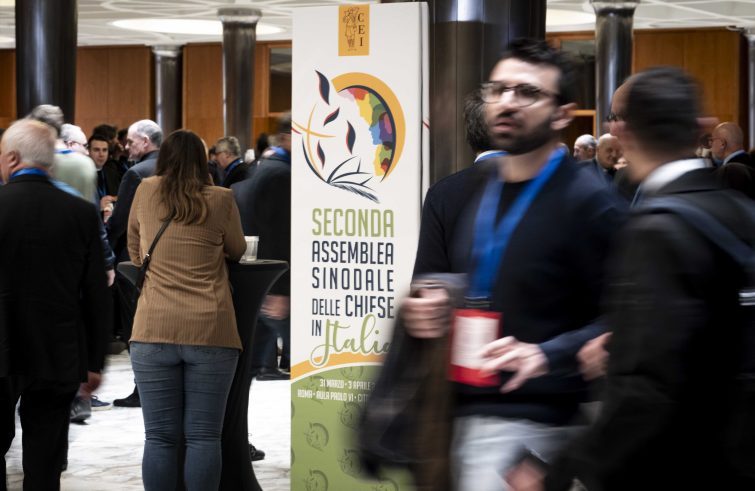
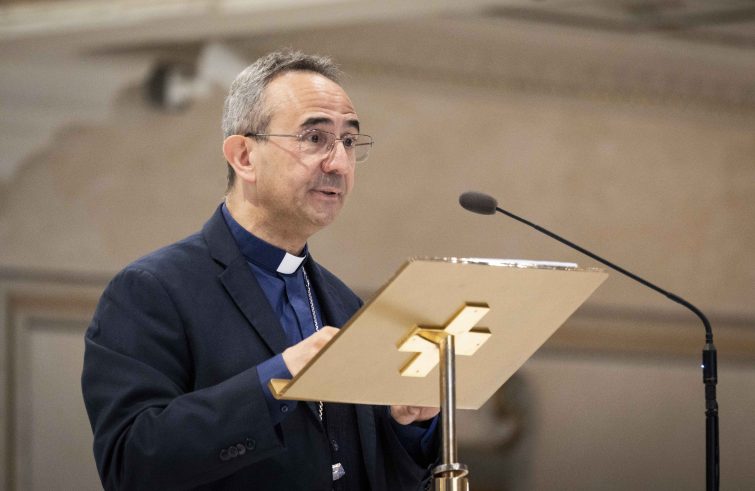
“Synodality is a mindset and a methodology. The next step is implementation.” Bishop Marco Busca of Mantua, president of the Italian Episcopal Commission for Liturgy, outlines the path ahead for the Italian Church. On the eve of the Third Synodal Assembly, the prelate emphasised the importance of co-responsibility, formation and unity of vision in translating the Summary Document into practical pastoral choices that can breathe new life into ecclesial communities.
Your Excellency, what is the top priority to ensure the Synthesis Document does not remain at a theoretical level but takes on practical form?
We need to distinguish between value and urgency. I believe that an important starting point is starting with all those proposals that seek to expand the active role of the Church. This should include not only the clergy, but also all the communion bodies, which are called to take on a renewed sense of responsibility for community leadership and governance. Examples include pastoral and presbyteral councils, as well as new forms of collaborative management.
What role can formation play in this process of renewal?
It is essential to redefine formation as a unified, integral process. While there are many formation proposals in dioceses, they often do not function as a cohesive unit, resulting in numerous activities lacking a unifying vision.
There is need for unity of vision and planning, to avoid dispersion and overlapping initiatives.
With regard to the ministries, what role can they play in the life of the Church today?
This is a key focus area. Ministries, including newly established ones, are precious instruments of shared responsibility. Only by recognising their value can the document be translated into transformative actiion. It is important to remember that the Church encompasses the entire faith community, not just ordained ministers.
Which image of the Church emerges from this third Synodal Assembly?
The fact that a third Assembly is being held in continuity with the previous ones is a sign of unity and shared purpose. The document is organic, deeply rooted in both Scripture and the Second Vatican Council, faithfully reflecting the journey undertaken. Harmonising all the contributions was undoubtedly challenging, but the end result is a balanced document that presents a realistic and pluralistic vision of the Italian Church.
Are there any issues that, in your opinion, warrant swifter decisions?
Indeed, delay is not an option for some. I am thinking of Christian initiation and, more in general, of pathways for introduction into faith.
After decades of experimentation, it is now time to establish common guidelines regarding godparents, sacraments and the collaboration between parishes and families.
The Synodal Path in Italy
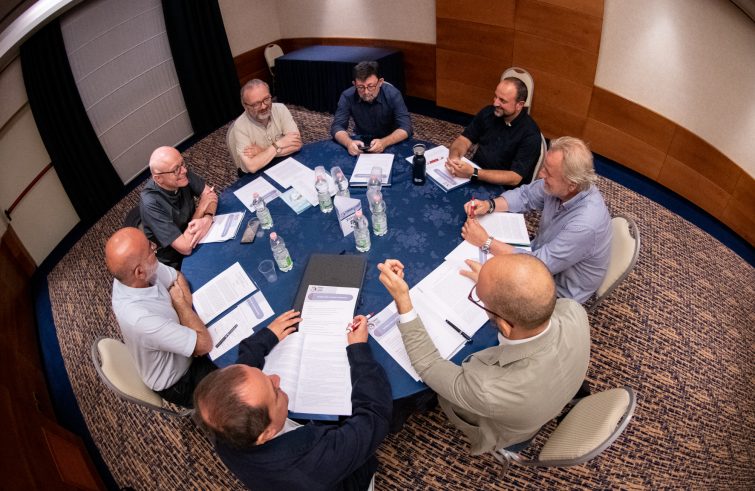
Launched in 2021, the Synodal Path of the Italian Church comprises four phases: narrative, sapiential and prophetic, with an implementation phase to follow. Following two national assemblies in 2023 and 2024, the Third Assembly will conclude the prophetic phase with proposals for diocesan implementation, which will be submitted to the Standing Committee of the Italian Episcopal Conference. The goal is to promote a more missionary, co-responsible, and united Church, where all members participate in a shared mission, united by the diversity of the charisms and ministries.
The management of assets and facilities is equally urgent. What course of action should be taken?
Shared and transparent management should be stepped up, involving competent laypersons entrusted with effective co-responsibility. The decline in the number of priests requires new forms of collaboration. One such option is financial-administrative support figures working alongside parish priests, as well as giving laypeople specific mandates to properly support the religious communities. I am thinking of providing economic and administrative support alongside parish priests, as well as giving laypeople specific mandates to support communities properly.
The liturgy is often perceived as entailing a language issue. Do you agree?
No, we must avoid reducing it to a communication problem.
The liturgy is an act of faith, not an aesthetic or emotional expression.
While demands for greater accessibility are legitimate, they must be balanced with a deeper understanding of the mystery.
Can the liturgy serve to revitalise one’s faith?
It certainly can. In Desiderio Desideravi, Pope Francis invites us to be formed “in and through the liturgy”. However, a comprehensive approach that values words, chants, gestures and ministry is required. Widespread liturgical formation is needed, as well as care for the ars celebrandi, attention to styles of presiding and accompaniment of young people in community prayer.
How can the younger generations be encouraged to participate in the liturgy?
It is a cultural and pedagogical challenge. Mass is the pinnacle of ecclesial life, reached gradually through a series of preparatory steps.
In order to foster an authentic experience of prayer among young people immersed in digital culture, we must guide them towards an understanding of the faith, welcoming contemporary languages without trivialising them.
Many fear that the synodal process will be discontinued in the dioceses. Do you share this concern?
I understand that concern, but now is the time for subsidiarity. The upper spheres must support the creativity of the local communities. The synodal discussion highlighted the strong bonds between the Italian Church and local churches.
It would be useful to establish a permanent organism to foster this synergy.
In my diocese, for instance, we have decided to devote two years to the coordinated reception of the synodal processes with the help of trained delegates.
Does this Assembly mark the conclusion of the listening process, or the beginning of a new phase?
I would argue that it is both. After years of listening and discernment, the implementation phase is now getting underway. Synodality is both a mindset and a methodology; now, we must move beyond mere conceptualisation and give concrete form to that which has been inspired by the Holy Spirit. The real challenge lies in the reception of the document, so that it may become leaven in the life of our communities.
As reaffirmed by Pope Leo XIV, all of this has Christ at its centre.
Exactly. Putting the liturgy at the centre means putting Christ at the centre, not the ritual experience. The Church is born through liturgical celebrations and it is in the liturgy that the Church allows the Lord to act. Without the face of Christ, every value is reduced to ideology. The document clearly reminds us of this:
Putting Christ at the centre renews our personal and community encounter with him today.
What are the hopes for the future of the Synodal Path?
That a style of communion be consolidated with less particularism and greater co-responsibility. Synodality is not a project to be shelved, but a way of being Church. It is a journey involving everyone, and if experienced with faith, it can open a new chapter for our communities.