

“Being a minority, living in a Muslim country, compels us to seek the essential even in proclaiming the love of Christ.” Monsignor Paolo Martinelli, Apostolic Vicar of Southern Arabia, led a delegation of ninety young people from the Gulf to Rome for the Jubilee of Young People. He shares the strength of the experience, the significance of being Church as a minority, and offers words of sorrow and responsibility following the shipwreck off the coast of Yemen.
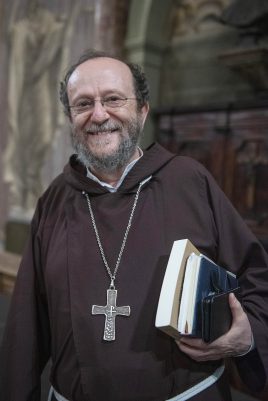
(Foto Siciliani – Gennari/SIR)
What did it mean for you to accompany the young people of the Vicariate to the Jubilee of Young People in Rome?It was a great joy to be with and walk alongside our young people. Most unforgettable for me was the journey we made together from Castel Sant’Angelo to the Holy Door of Saint Peter’s. At the start, the young people entrusted me with the Jubilee cross, which I carried throughout the pilgrimage to the Holy Door. We sang and prayed together. We took time to pray the Rosary, chant psalms, and recite the Creed, which we are particularly meditating on this year as we commemorate the 1700th anniversary of the Council of Nicaea.
What did this symbolic and spiritual journey mean for you as a bishop?
Walking with them to the Holy Door was a way to remember Christ the Good Shepherd, who never abandons us, who is always ready to forgive and grant us a new beginning. For me, as a bishop, it was important to be with them to express the closeness of the whole Church in this particular time of their lives – youth – a time for deepening questions about the meaning of life, for vocational discernment, and for discovering God’s will for one’s life.
No one is born by chance; we are here because we are loved and willed by God. It is important that young people never feel alone but see the Church at their side, supporting them in their journey of faith.
What witness did the young people from Arabia bring to and receive from the universal Church?
The Church in the Gulf is truly unique. We are a Church of migrants, made up of the faithful from over one hundred different nationalities, and this is reflected among our young people. This condition makes them more aware of the universality of our faith and of the fact that the encounter with Christ is for everyone. I believe their presence was a sign for all of how faith unites in diversity. When we are aware that we have all received the same baptism and share the same Christian faith, cultural differences become a source of richness and mutual enrichment.
(Foto SIR)
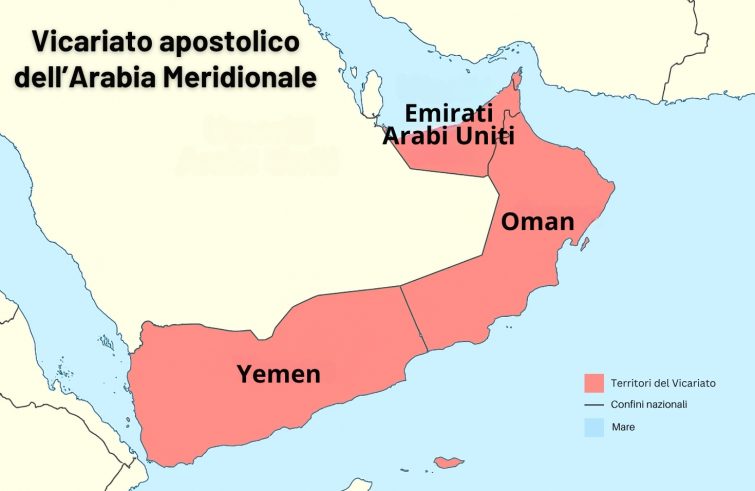
The Apostolic Vicariate of Southern Arabia
It includes the United Arab Emirates, Oman, and Yemen. The Church is composed entirely of migrants from over one hundred countries, primarily in Asia and Africa. Its pastoral structure is based on multilingual parishes animated by religious, religious sisters, and laypeople engaged in catechesis, liturgy, and spiritual accompaniment. Monsignor Paolo Martinelli has been Apostolic Vicar since 2022. Despite restrictions on religious freedom, the Christian community bears witness to the Gospel through charity, dialogue, and a faith lived in daily life.
What were the stages of their pilgrimage before arriving in Rome?
Before reaching Rome, our young people visited several Italian cities where various saints are venerated: Saint John Bosco and Blessed Pier Giorgio Frassati in Turin, Saint Charles Borromeo in Milan, Saint Anthony of Padua, Saint Francis, Saint Clare, and Blessed Carlo Acutis in Assisi, Saint Rita of Cascia and Saint Padre Pio of Pietrelcina in San Giovanni Rotondo. Finally, they arrived in Rome, where the Apostles Peter and Paul gave their lives for Christ. At Peter’s tomb, we found the root of our Christian life. Peter’s faith in Christ is the rock on which to build our lives.
(Foto Vatican Media/SIR)
How did the young people experience Rome and the encounter with the Pope?
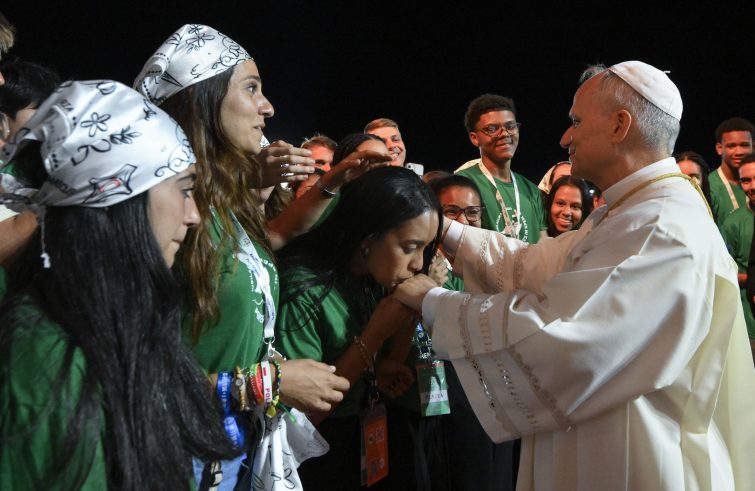
Being in Rome with so many other young people from around the world was for them a great comfort and immense joy.
They powerfully experienced a profound sense of belonging to the Church, the holy people of God spread throughout the world.
Pope Leo’s words during the vigil and homily were encouraging: “Aspire to great things, to holiness, wherever you are. Do not settle for less. Then you will see the light of the Gospel grow in you and around you every day.” These words of Pope Leo spoke to the hearts of our young people. We must not be afraid to desire great things. God created us for greatness, for Himself, as Saint Augustine reminds us. And the hearts of the young can only find truth and true joy in Christ.
How is the love of Christ proclaimed today in contexts where Christians are a minority?
Being a minority, living in a Muslim country, compels us to seek the essential even in proclaiming the love of Christ. I always tell our young people that no one can prevent us from living the Christian witness in daily life. We are called to live according to the mystery we celebrate in the Eucharist. We are called to be witnesses of the Gospel with words and with our lives: in our families, communities, schools, workplaces, and society.
How is this reconciled with restrictions on religious freedom?
We cannot engage in proselytism. For us, it is important to recall what Benedict XVI affirmed: Christianity spreads through attraction, not proselytism; through the witness of a life changed by the encounter with Christ.
In our context, it is very important to cultivate relationships of respect with believers of other religions.
In 2019, Pope Francis came to Abu Dhabi to sign the Document on Human Fraternity together with the Grand Imam of Al-Azhar. Dialogue is part of our witness. It is important to help our young people foster relationships of collaboration with believers of other religions, with an awareness of our identity and in valuing the shared search for God.

(Foto AFP/SIR)
In light of the shipwreck in Yemen, what word do you feel compelled to offer as pastor of a Church along migration routes?
The shipwreck near the coast of Yemen is a source of great sorrow and sadness, as Pope Leo XIV rightly expressed in his message of condolence through the Secretary of State, Cardinal Pietro Parolin. Unfortunately, it is a phenomenon that occurs all too often. These journeys are organised by traffickers and often end tragically, as in this case. We pray for the victims: may the Lord welcome them into His peace; may the survivors receive proper care and find peace again.
How can the Church contribute to real change?
As a Church of migrants, I believe it is important to highlight
the significance of migratory processes, which are so widespread across the world.
These processes must be wisely managed through prudent and well-considered migration policies, putting an end to these journeys organised by unscrupulous traffickers.
What mission do you entrust to the young people returning, and what legacy do you leave the Church after this Jubilee?
I ask them to be witnesses of Christ, above all to other young people living in our Apostolic Vicariate, and to be a sign of hope for all. I truly hope that the joy of these days in Rome may, through them, reach and inspire other young people. I also ask them to be faithful to the desire for happiness they carry in their hearts, to look at their lives as a gift from God, and to discover, in the light of the Gospel, their path, vocation, and mission.