

“Believing is the most subversive act we can commit”. Nicolò Govoni, founder and CEO of Still I Rise, visited Rome for the Jubilee of Young People, where he shared his testimony at two distinct events: a discussion on inclusion and a gathering in St Peter’s Square. Nicolò, 32, recounts how fragility can be transformed into a resource, friendship can become tangible support, and hope can offer a horizon of redemption, both personal and collective.
(Foto Still I Rise)
Nicolò, you often say that your commitment was also born out of failure. When did you realise that fragility could become a strength?
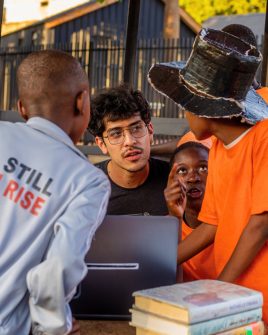
It was a gradual process. One key moment happened in India, where I had moved at the age of twenty to study. During an internship with a non-profit organisation, I was helping children with their maths homework. I used tricks I had come up with myself to get by at school, because I was terrible at maths. The teacher, a computer engineer, was impressed: “What an interesting technique!” That was the first sign. Over the years, I came to understand that my weaknesses were actually resources to create connection and value.
The name of your organisation, “Still I Rise”, reflects this idea. What does it mean to you?
It means “I rise again”. It’s a message of redemption, not only for the children we help but for us adults too.
No one starts from a perfect beginning. But we have the possibility to transform our story.
Pain is not the end: it can become a seed.
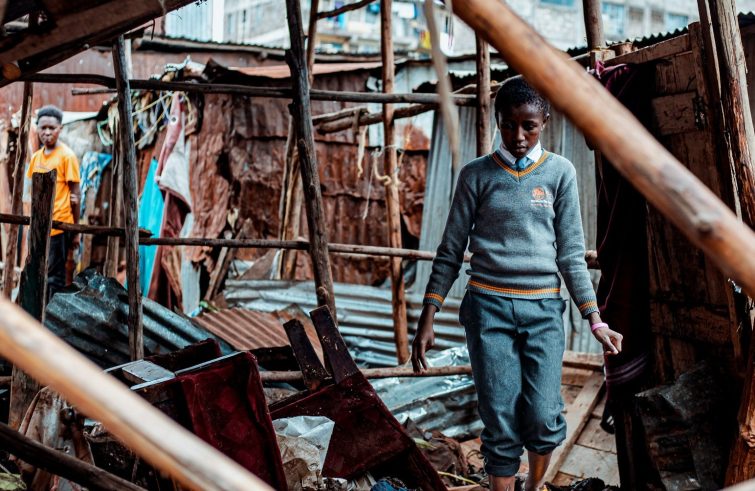
Founded in 2018, Still I Rise is an international non-profit organisation that provides free, high-quality education to refugee and vulnerable children. Operating in Syria, Kenya, Colombia, the Democratic Republic of the Congo and soon also in Italy, it promotes an independent and replicable educational model, aiming to form a new generation of ethical and aware leaders. Its mission is based on three pillars: educate, protect, defend.
During the Jubilee you spoke of hope as a subversive act. In what sense?
In the sense that today, hoping has become a revolutionary gesture. I see many young people who are disheartened, raised in a climate of fear: “there’s no work”, “there’s no future”, “if you don’t make certain choices, you’re out”. It’s a narrative that paralyses. True rebellion is to keep believing. I wasn’t particularly gifted, but I never stopped trying.
You’re critical of the adult world. What disappoints you most?
The lack of trust. Adults often transmit anxiety and resignation.
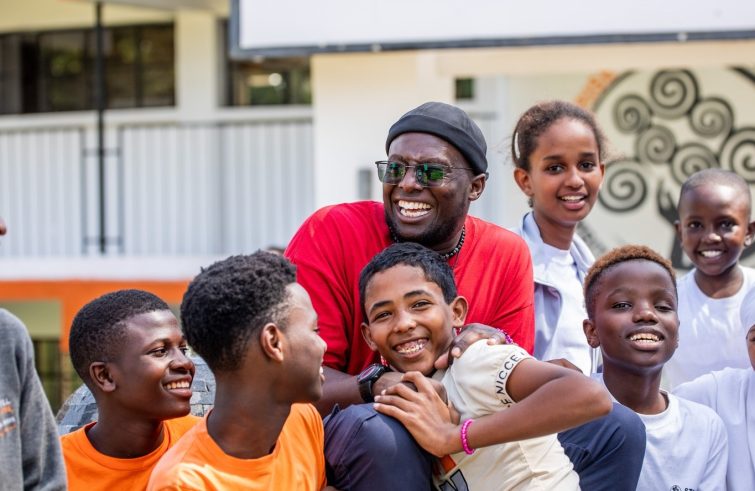
Young people need figures who inspire them, not who scare them. I believe much more in young people than in adults.
They are open, proactive, ready to get involved. When you truly listen to them, they respond with strength.
-
- (Foto Still I Rise)
-
- (Foto Still I Rise)
What are you taking away from this Jubilee of Young People?
The awareness that there is a young, vibrant community within the Church. In Italy, due to demographic reasons, it is often perceived as an elderly reality. But that’s not the case. In St Peter’s Square there were thousands of young people under the sun, with their umbrellas, listening to words of peace. It was a powerful image. There is a thirst for meaning.
The Pope spoke of friendship as a path to change the world. How important is friendship to you?
Very important. I don’t have many friends, but those I do have are fundamental. My deputy is my best friend from high school. The head of the school in Kenya is my best friend. These are authentic relationships. Without these people, everything would be much harder. The quality of our bonds also determines the quality of the impact we can have.
And faith? What role does it play in your personal journey?
I consider myself a man of faith, even if I don’t define myself as religious. I’m still seeking my path.
But the values I believe in – dignity, justice, inclusion – are Christian. In this, I feel close to the Church.
And I believe that, if it continues to embody them in this way, it will be able to speak to many more people than we can imagine.
(Foto Still I Rise)
Where are you now?
I’m in Kenya, on the coast. Every year we take the children for a month by the sea. For many, it’s their first time. It’s a way of saying: you too have the right to beauty, to lightness, to joy.
One final message for the young people who took part in the Jubilee?
Keep believing. Don’t let anyone tell you that you won’t make it. You’ll make mistakes, certainly, but you are not alone. And every time you fall, you can rise again. Still I Rise is not just a name. It’s a promise. And it applies to all of us.