

“The tensions at the border are a source of deep concern. As a Church, we are called to resist divisive ideologies and to build bridges of fraternity.” With measured yet firm words, Archbishop Francis Xavier Vira Arpondarattana, President of the Catholic Bishops’ Conference of Thailand, comments on the ongoing crisis along the Cambodian border. While the conflict threatens to severely affect the most vulnerable communities, the Church responds with closeness, prayer, and a voice for peace.
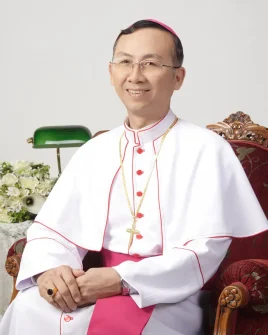
(Foto Conferenza episcopale thailandese)
Excellency, how does the Thai Catholic Church interpret this moment of military tension at the border?
The Thai Catholic Church views the current military tension along the border with profound concern, interpreting it through the lens of Catholic Social Teaching, which prioritises human dignity, peace, and justice. The Church is fully aware that border disputes, although presented as mere territorial issues, are often exploited for political purposes. We observe how these tensions may be manipulated to stoke nationalist sentiments, distract public attention from domestic issues, and serve the interests of specific political actors. Such manipulation hinders genuine efforts towards peaceful resolution and sustainable development, placing short-term political opportunism above the lasting well-being of the population.
What concerns does the Church have about the instrumentalisation of the conflict?
The Church consistently warns against the dangers of extreme nationalism, which can lead to division and conflict instead of fostering a sense of shared humanity and regional cooperation.
We recognise that many of the roots of border conflicts, including the current one, are deeply intertwined with historical complexities, often stemming from colonial-era agreements and maps that failed to respect local realities or traditional boundaries.
These historical legacies create intricate challenges that cannot be solved with simplistic solutions or aggressive stances. Understanding this historical context is essential to progressing towards genuine reconciliation and fair solutions that acknowledge the past and build a more peaceful future.
Who suffers the most from these tensions?
Ordinary people, especially those living in border areas, are the first victims. They suffer displacement, loss of livelihoods, and constant threats of violence. The Church believes that ultra-nationalist policies are a dangerous trap that hinders national development and suppresses the spirit of openness and fraternity among peoples. Our faith calls us to recognise the inherent dignity of every human being, regardless of nationality or ethnicity, and to build a world where all can live in peace and mutual respect. We must resist divisive ideologies and instead foster a culture of solidarity and genuine fraternity.
What is the Church’s priority at this moment?
It is a critical concern for us. We see that the escalation of the conflict often serves immediate political interests, overshadowing the fundamental need for long-term sustainable solutions.
True peace requires a commitment to addressing the root causes of tension, which may include economic disparities, resource allocation, and unresolved historical grievances.
The Church strongly supports dialogue, negotiation, and international mediation as pathways to lasting peace, in contrast to short-sighted actions that perpetuate cycles of violence and instability.
What are the main pastoral priorities to support the affected communities?
Our pastoral priorities focus on providing immediate aid, spiritual comfort, and upholding human dignity. The local Catholic communities in border areas are at the forefront of the pastoral response. Our immediate priority is to ensure humanitarian assistance for those affected by the conflict, including displaced persons and vulnerable families. This includes offering shelter, food, medicine, and other essential items.
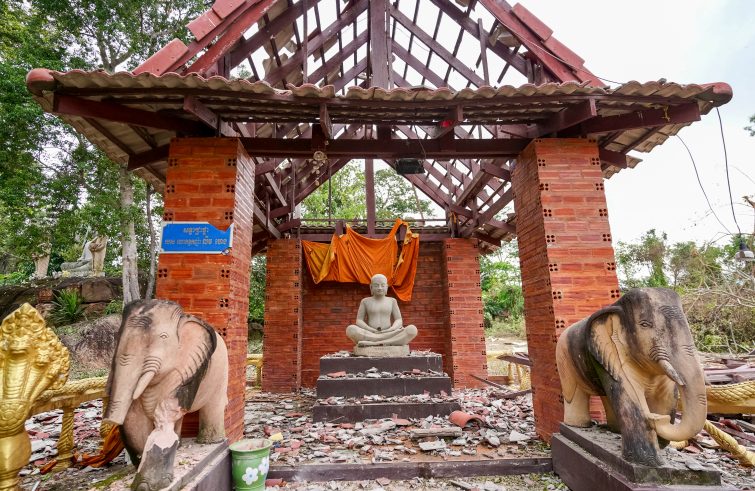
Since 24 July, an armed conflict between Thailand and Cambodia has been ongoing along the eastern frontier. Clashes began in the Ta Muen Thom area, resulting in at least 32 deaths, including civilians, and over 130,000 displaced persons. Thai authorities have declared martial law in eight districts. At the heart of the tensions are unresolved territorial disputes, including those related to the Preah Vihear temple. The international community is working to prevent further escalation.
Who is coordinating this effort on the ground?
The Catholic Office for Emergency Relief and Refugees (COERR), established by the Catholic Bishops’ Conference of Thailand, plays a key role in coordinating and delivering aid. Our priests, religious, and lay volunteers actively visit affected communities, offering spiritual support, listening to their experiences, and bringing a presence of solidarity and hope amidst suffering. We are committed to alleviating both their physical and emotional burdens.
What role does prayer play in the Church’s response?
Prayer for peace is a cornerstone of our response. We believe in the power of prayer to transform hearts and situations. Special Masses, prayer vigils, and rosaries are being organised in parishes across Thailand to intercede for an end to hostilities and for lasting peace.
Beyond prayer, the Church unequivocally condemns all acts of violence against civilians.
We reiterate that international humanitarian law must be respected, and that non-combatants – including women, children, and the elderly – must always be protected. We appeal to all parties involved to exercise restraint and to place the safety and welfare of the civilian population above all else. This position stems from our belief in the sacredness of human life.
(Foto AFP/SIR)
Are further humanitarian or solidarity initiatives planned?
Prayer initiatives are already underway. Dioceses and parishes are actively promoting prayers for peace, both individually and communally. This includes specific intentions during daily Mass, community rosaries, and moments of Adoration dedicated to peace along the border. Families are also encouraged to pray together for peace in their homes. Regarding humanitarian response, our focus remains on emergency relief for those directly affected by the recent escalation. COERR and diocesan social action centres are mobilising resources to provide food, water, temporary shelters, and medical assistance.
And in the medium to long term?
While we are prepared for emergency relief, our long-term planning for extended humanitarian interventions is currently limited. We sincerely pray and hope that the conflict will be resolved swiftly and will not evolve into a prolonged war. We share the widespread hope that the Thai government, alongside international mediation, will act effectively to de-escalate tensions and reach a rapid and peaceful resolution, preventing further suffering and displacement. However, should the situation unfortunately deteriorate into a protracted crisis, the Church is ready to adapt its response and develop more structured and lasting programmes.
Is there contact with the Catholic Church in Cambodia?
Absolutely. The Catholic Bishops’ Conference of Thailand maintains active and deeply fraternal ties with the Catholic Church in Cambodia. We are in regular contact with our counterparts, sharing information, concerns, and supporting each other in our respective pastoral missions. This relationship is rooted in a shared faith and a long history of cooperation.
The ties between our two Bishops’ Conferences are strong and fraternal, built on years of collaboration. We are in constant communication with the bishops of Cambodia, sharing information, concerns, and prayers.
A tangible sign of this solidarity is the presence of four Thai missionaries serving in various dioceses in Cambodia, contributing to the growth and pastoral mission of the local Church. This exchange of personnel strengthens mutual understanding and reinforces the bonds between our two Churches, especially in a time of tension such as this.
(Foto AFP/SIR)
What message would you like to convey to the international community and the universal Church?
The key message we wish to convey is a fervent appeal for peace. Peace is not merely the absence of conflict but the presence of justice, respect for human dignity, and reconciliation. It is a universal aspiration, and we invite all people of goodwill to work towards it. Everything begins with respect for international law, avoiding harm to civilians even in times of war. We urge the international community and all parties involved to strictly adhere to international law, particularly international humanitarian law. This includes the fundamental principle of protecting civilian lives and infrastructure during armed conflict. Even in wartime, there are moral and legal boundaries that must never be crossed. Attacks on non-combatants are unacceptable and represent grave violations of human dignity.
How can we break the spiral of violence?
We strongly advocate for dialogue and negotiation as the main means of resolving conflicts. Violence only breeds more violence and suffering.
We call for intensified diplomatic efforts, impartial mediation, and open channels of communication among all parties, to achieve a just and lasting solution.
It is through respectful dialogue that understanding is built and sustainable solutions can be found.
What can the universal Church do?
We ask that human dignity be promoted through concrete actions. This means allocating resources to humanitarian aid for those affected by the conflict, promoting economic cooperation that benefits all, and investing in initiatives that build bridges of understanding and solidarity among nations and peoples. True security and prosperity are not founded on military strength, but on shared development, mutual respect, and a commitment to the common good. We believe that acts of charity and solidarity can overcome the divisions sown by violence and pave the way for a more fraternal world.