
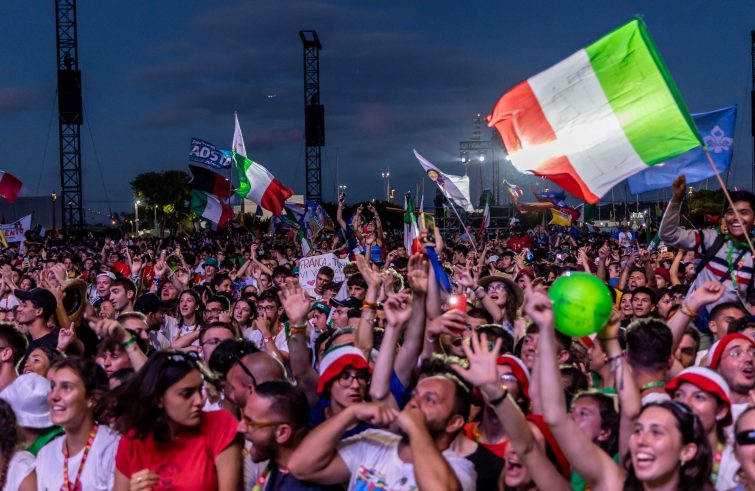
The Jubilee of Young People will take place in Rome from 28 July to 3 August, with around 70,000 Italian youths expected to participate. They will be accompanied by over 100 bishops and hundreds of priests. ‘Casa Italia’ will be housed at LUMSA University on Via di Porta Castello, where the National Service for Youth Ministry (SNPG) has arranged hospitality and logistical support. Groups arriving from across Italy will find 100 volunteers from various regions and ecclesial groups ready to assist them. SIR asked Father Riccardo Pincerato of the SNPG to comment on this significant event, which is expected to be the largest ever in terms of participation, with around one million young people from around the world expected to attend.
What kind of Jubilee will be experienced by the young Italian pilgrims?
This is the first ordinary Jubilee since the year 2000, and the first of the new millennium. It will be the first Jubilee for our young people, taking place at a different time in the Church, and in a different cultural and societal context than in the year 2000.
The impression is that it is a “sought-after” Jubilee, with young people actively choosing to participate and be present.
There are some characteristics that make it special. Firstly, the theme of mobility is very different from that of the year 2000. Today, young people have considerably more opportunities to travel compared to back then. There are more opportunities to travel to Rome and visit the city today than in the past.
The decision to participate stems from recognition of the context in which the Jubilee is taking place: it is a faith-based experience involving relationships and encounters, proposed by the Church. Another aspect is also important…
Which one?
For many young people, participating in the Jubilee is an opportunity to experience a new Church. Pope Francis is no longer with us. We now have Pope Leo. Since the year 2000 there is a new Church that young people are experiencing in their own communities. I want to emphasize that while in the year 2000 the Church was still “the heart of the village,” this is no longer the case today. Young adults no longer feel they are naturally part of the Church or the Christian community. Today, many young people are not finding their way to the Church through the traditional paths of oratories or religious groups and organizations. For them, experiencing the Jubilee is also challenging because it involves discovering or rediscovering the Church and the ecclesial community.
This could be the first experience of the Church and of faith for many of them.
Some young people have decided to participate because they were motivated by their parents who remember the great Jubilee of the year 2000 and the huge gathering at Tor Vergata with John Paul II. Thus, the Jubilee becomes a legacy left to them by their families and an invitation to embark on this great adventure.
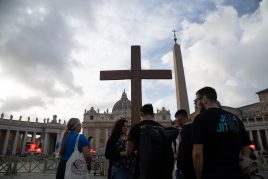
What plans are in place by the Youth Pastoral Service in order to ensure that young people have the best possible experience of this Jubilee event?
Firstly, we published a handbook in both paper and digital formats. It contains rites and liturgies for experiencing the key moments of the Jubilee year that include pilgrimage, the crossing of the Holy Door, reconciliation, and profession of faith. The handbook also contains daily prayers, liturgical hymns and spiritual reflections on the meaning of the Jubilee. There is also a personal digital space in the form of a journal in which to record emotions, reflections, prayers and meetings. This journal has been prepared in collaboration with the Youth Observatory of the Giuseppe Toniolo Institute, and all contributions from pilgrims will be used for an anonymous survey of young Italians.
The department for the Pastoral Care of young people also offers a comprehensive programme of events. How is it structured?
This programme revolves around three proposals: “The 12 words of hope” (Wednesday 30 and Thursday 31 July): a listening and discussion initiative comprising theme-specific meetings held in twelve Jubilee churches throughout the city. The words are “courage, threshold, redemption, habit, responsibility, conscience, meaning, discovery, promise, people, full joy and embrace”. These meetings will bring together the voices of individuals bearing witness to ‘incarnate hope’ in their personal or professional lives, the voices of the young people present and the voices of the bishops. There will also be ‘proximity’ experiences offering an opportunity to experience hope through concrete acts of service. On July 31 St. Peter’s Square will host an event titled “You are Peter, confessio fidei with young Italians,” inspired by the apostle Peter. A “Jubilee for all” event, organized in collaboration with the Service for the Pastoral Care of People with Disabilities, will be held in Rome on July 30 and 31, where young people will have the opportunity to experience moments of reflection, prayer, and leisure.
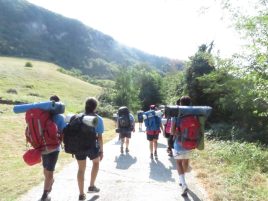
With just a few days to go until the event, which items would you recommend young people put in their rucksacks? What would be particularly useful for this pilgrimage to Rome? (And I’m not referring to the sleeping bag…)
Two words should find their place in the rucksack: not objects, but words. The first is ‘teachableness’ that refers to the aptness to learn, a term that indicates a person’s disposition to be taught, or docility, the ability and openness to learn from others. Young people will encounter fatigue, tiredness as well as the experience of bearing Christian witness and being part of a community. They will experience God. If they do not humble themselves to encounter challenges, the unexpected, toil, the Word and the Church, they will be impervious stones and lack enthusiasm for the pilgrimage. The second word is ‘wonder’: being teachable and open to the Spirit leads to a sense of wonder and awe. Awe and amazement at the breath of the Spirit. In a world that is full of noise, the invitation is to trust in the voice of salvation and joy that whispers in your heart.