
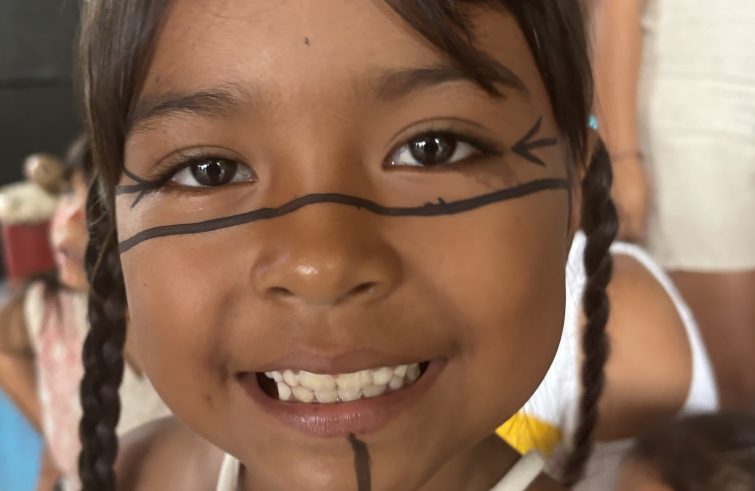
The beating heart of the Brazilian Amazon is home to 305 recognised indigenous peoples. They are the stewards of the ancient wisdom of the world’s green lung and its ecological balance. They speak 274 languages, and according to official Brazilian data, approximately 13.8% of the country’s territory is designated as ‘indigenous land’. However, the lands and the people living there face constant challenges from large landowners, multinational companies and arson, as evidenced by the more than 500 Catholic missionaries active in this territory, which is approximately four times the size of Italy. Sister Sharena Ferrão, a missionary of the Immaculate Conception, serves the community of Santa Rita do Weill in the Diocese of Alto Solimões, on the border between Brazil, Colombia and Peru. She carries out her mission with the Tikuna people amidst the many challenges posed by drug and human trafficking, targeting women and children in particular. The reality for indigenous peoples living in the Brazilian Amazon is an intricate tapestry of hopes and wounds, redemption and resistance. This is exemplified by the village of Três Unidos, the vibrant heart of the Kambeba people. Originally from the border regions between Brazil and the Andean countries, this ethnic group settled in this area, about an hour and a half by boat on the Rio Negro from Manaus, the capital of the Amazon region.
A positive example. The Três Unidos community is a positive example of how indigenous traditions can be preserved and valued. A community restaurant called Sumimi is run by the women of the village which serves traditional dishes made with local ingredients. It was created on the initiative of the tuxaua, or indigenous chief, Waldemir Silva, or Triukuxuri, as he is known in the Kambeba language. The Foundation for Amazon Sustainability (FAS), a group dedicated to promoting local tourism in this region of Brazil, supported his project.
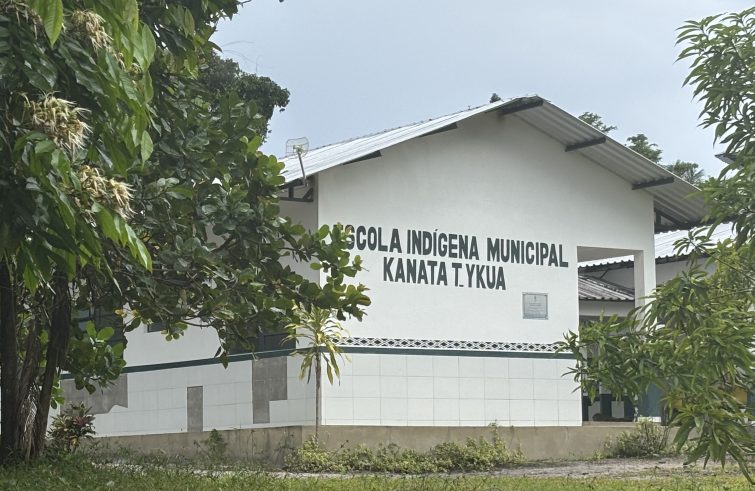
“The time of cutting down trees to produce crops is over. Today, providing our children with an education and teaching them to care for the natural environment is the most important thing,” Waldemir says to Popoli e Missione. His daughter, Neurilene Cruz (Miskui in the indigenous language), is a nurse at the local clinic and also works as a cook at Sumimi. She represents her people at the largest international food fair in the Amazon. Education is a top priority for the Três Unidos community, whose local school offers the regular programme of studies alongside classes in the Kambeba language and traditions. This approach strengthens the cultural identity of young indigenous people while preparing them to face the challenges of the modern world.
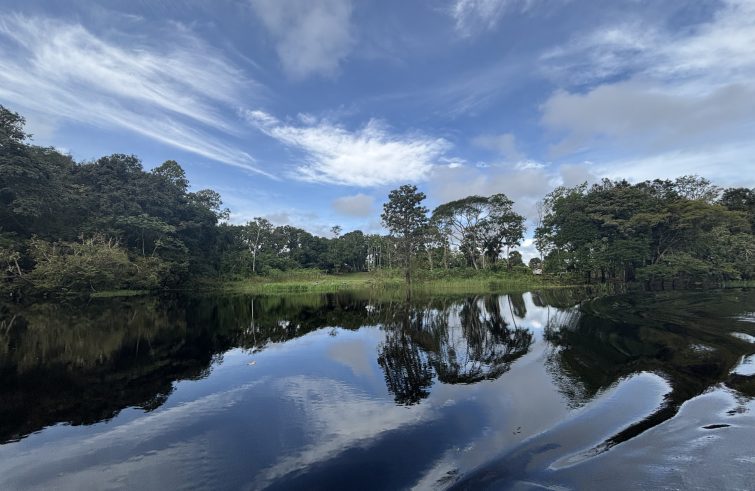
Criminal groups and violence. While the Três Unidos indigenous community is home to only a few hundred Kambemba people, the Tikuna are one of the largest indigenous groups in Brazil, numbering over 50,000. They live in the Alto Solimões region, where the Solimões and Rio Negro rivers converge to form the Amazon River. Situated between the cities of Tabatinga and São Paulo de Olivença, this area is one of the most remote in Brazil. Although rich in biodiversity, the area is under threat from the growth of criminal organisations trafficking cocaine, illegally mined gold and illegally logged timber.
The Tikuna people have traditionally been fishermen, farmers and artisans whose social structure centres around the extended family. However, they have long faced violence from colonists, in addition to economic and environmental threats to their communities.
The Capacete Massacre, in which 14 indigenous people were killed by fazendeiros, is emblematic of this violence. Public opinion was shocked by this atrocity 37 years ago, leading to safeguards for indigenous peoples being included in the 1988 Constitution.
-
- (Foto Paolo Manzo)
-
- (Foto Paolo Manzo)
Living with dignity. The Tikuna people are spearheading a significant cultural renaissance through the establishment of bilingual schools and the publication of translated books. Furthermore, young graduates are returning to their communities from Manaus to work in the health and justice sectors. However, as indigenous leader and schoolteacher Luísa Tikuna points out, their rallying cry remains strong: “We don’t want to survive. We want to live with dignity. We want to live with our language and our land.”
School and traditional culture. The motto of Maria Utxi, a teacher and spiritual leader from a community near Jordão in the state of Acre, bordering Bolivia, could well be ‘Rebirth in school, in the language of the forest’. “The forest speaks our tongue. Our culture is passed down through the songs, stories and names of plants. If we lose this, we lose ourselves”, Maria says standing alongside João Kaxinawá, a 16-year-old student who explains: “I knew hardly any Portuguese when I began attending the village school. But there I learned to write in my own language and in the language of the ‘whites’”.
There are now 3,400 schools serving Brazil’s indigenous communities, yet for every story of rebirth, there are many stories of sorrow.
The infamous garimpeiros. A few years ago the Yanomami people that live in villages on the border with Venezuela endured a terrible tragedy. In 2022, Sister Giovana M., a lay missionary, denounced the devastation caused by the invasion of illegal gold miners, the garimpeiros. “I saw children with ulcerated skin, women who had been raped and entire villages contaminated by mercury,” said Sister Giovana in a witness account sent to the Brazilian Bishops’ Conference (CNBB).
Pope Francis’s exhortation. Following her report, images of skeletal Yanomami children circulated around the world and in 2023, President Lula’s new government initiated medical interventions and evictions. However, the wounds run deep. “It’s a low-intensity ethnic cleansing,” denounces Davi Kopenawa, a Yanomami leader and one of the most influential voices in the indigenous movement. “They treat us like obstacles to development, but we are the forest. Without us, it will die,” he adds. This is a concept that Pope Francis also emphasised in the 2019 Synod for the Pan-Amazon region: “We listen to the cry of the earth and the cry of the poor. The indigenous peoples of the Amazon remind us that we are not the absolute owners of creation. We are part of it.” Those words encapsulate the late Pope’s vision of combining ecology, social justice and spirituality. However, they also serve as a warning about the future of humanity as a whole, not just the world’s Green Lung and its native inhabitants.
*Popoli e Missione