
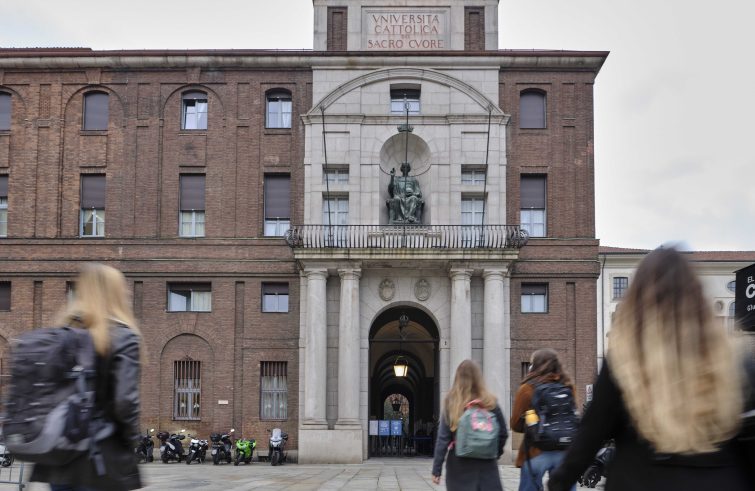
“Sound critical thinking is indispensable to navigating the complexities of this world.” Elena Beccalli, Rector of the Catholic University of the Sacred Heart, shares her thoughts on the role of the lay faithful as highlighted by Pope Leo XIV. From integral formation and to the social doctrine of the Church understood as a living culture, research as a service to Gospel-inspired proximity in society, the emerging vision is that of a university committed not only to achieving academic excellence, but also to creating a future for all, grounded in faith and open to the world.
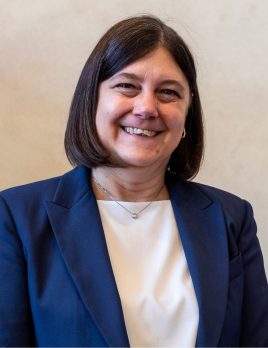
(Foto Università Cattolica del Sacro Cuore)
The Pope emphasises the importance of forming lay leaders in the Word of God and the Church’s social doctrine. In this context, what is the specific mission of a Catholic university today?
Our mission is to provide unbiased, constantly verified tools for interpreting reality that adhere to strict scientific standards. In educating the younger generations, we adopt models designed to develop critical thinking, teaching students to ask meaningful questions with an eye to the future, and encouraging them to challenge prevailing paradigms by offering a fresh perspective on reality. The entire academic community is committed to this daily task of offering appropriate thinking patterns within the scope of their own discipline, characterised by intellectual freedom and a steadfast commitment to truth. We carry out this task in an attitude of constant dialogue with the Word and Social Doctrine.
The entire academic community is committed to offering appropriate thinking patterns characterised by intellectual freedom and a steadfast commitment to truth.
Pope Leo XIV’s inspiring words to the members of the Centesimus Annus Foundation, of whose Scientific Committee I am a member, reminded us that Social Doctrine “helps us to realise that more important than our problems or eventual solutions is the way we approach them, guided by criteria of discernment, sound ethical principles and openness to God’s grace.”
Rector of the Università Cattolica del Sacro Cuore since 1 July 2024, Beccalli was elected on 6 June 2025 in Leuven as President of the Federation of European Catholic Universities (FUCE), the first Italian and the first woman to hold this position. An internationally renowned economist, she is Full Professor of Economics of Financial Intermediaries and served as Dean of the Faculty of Banking, Finance and Insurance Sciences for a decade. She is a Research Associate at the London School of Economics, Academic Fellow at the University of St Andrews, and Visiting Professor at the Singapore Institute of Management and Peking University. She directs the University’s Research Centre on Cooperative Credit and is a member of the Scientific Committee of the Centesimus Annus Pro Pontifice Foundation. A Consultor of the Dicastery for Culture and Education and co-editor of the Journal of Financial Management, Markets and Institutions, she is the author of numerous studies on ethics, sustainable finance, artificial intelligence, and female leadership.
Of the aforementioned areas – economics, education, culture and politics – which do you consider to be in the greatest need of competent Christian leadership today?
I believe it would be misleading to choose any one of these areas, as they are all interconnected. In fact, we are faced with challenges every day that cannot be addressed from a single perspective. We strongly believe in the importance of interdisciplinary and transdisciplinary education, as we recognise the growing need for a holistic education. This does not mean rejecting areas of specialisation, but rather placing them within a context of a dynamic flow of knowledge in all the aforementioned areas.
Without a comprehensive perspective, the transformations taking place are impossible to comprehend.
Education in critical thinking is the essential prerequisite the Holy Father has invited us to rediscover. Our commitment in this regard is reflected in our new university courses on artificial intelligence applied to philosophy, language sciences and finance, and in our decision to incorporate AI courses into our programme offerings at all levels.
But how can the social doctrine of the Church be transformed into a living, dynamic culture capable of informing personal and professional decisions?
By anchoring it in reality. We firmly believe that the social doctrine of the Church is an invaluable patrimony from which we can draw inspiration for our daily lives. However, this should not lead us to engage in sterile intellectualism, but rather encourage us to apply this heritage in practical ways. We strive to do this every day. For example, I am thinking of the Africa Plan that we have drawn up and are implementing, scientific research conducted within an ethical framework, dialogues with other cultures and religions with the aim of building bridges of fraternity, as well as our many activities with a positive social impact, including in the field of international cooperation, which we promote on our five campuses. All of these are opportunities to translate the principles of social doctrine into practical action.
In his address to the Italian Episcopal Conference on 17 June 2025, Pope Leo XIV encouraged the lay faithful to play an active role in social, cultural, economic and political life: “Take care that the lay faithful, nourished by the Word of God and formed in the social doctrine of the Church, are agents of evangelisation in the workplace, schools, hospitals, social and cultural environments, the economy and politics.”
“No-one can prevent you from being close to the people,” said the Pope. How can a lay Catholic living and working in academia or in the world of economics embody this closeness in accordance with the Gospel?
They must not retreat into an ivory tower, but rather live “in the heart of reality”, as Father Agostino Gemelli so often said. This requires us to pursue strategic alliances that foster creative cooperation with institutional bodies, associations, businesses and the Catholic Church in its own right.
I think the key is to try to find synergistic solutions.
Our University could collaborate with other institutions on projects centred on dialogue for integral human development. “Being close to people” is central to our aspiration. We want the Università Cattolica del Sacro Cuore to be the best university for the world, not of the world. In other words, a university dedicated to serving society.
How would you define a truly co-responsible lay presence in the Church and in society, one that is capable of not only serving, but also inspiring vision and shaping the future?
The hundred-year presence of the Università Cattolica del Sacro Cuore probably constitutes a real-life example. Our university is a large family with different branches, operating in synergy with the Church, public institutions, and with lay and religious organisations in Italy and abroad. But we are aware that forming a vision and planning for the future is no easy task. This is why it is so important to remain faithful to the university’s founding vision, paying close attention to the changes in society, the needs of younger generations and the demands of the communities we serve year after year. We must persevere with our educational mission and continue to build that laboratory of hope that is the university of Italian Catholics.