
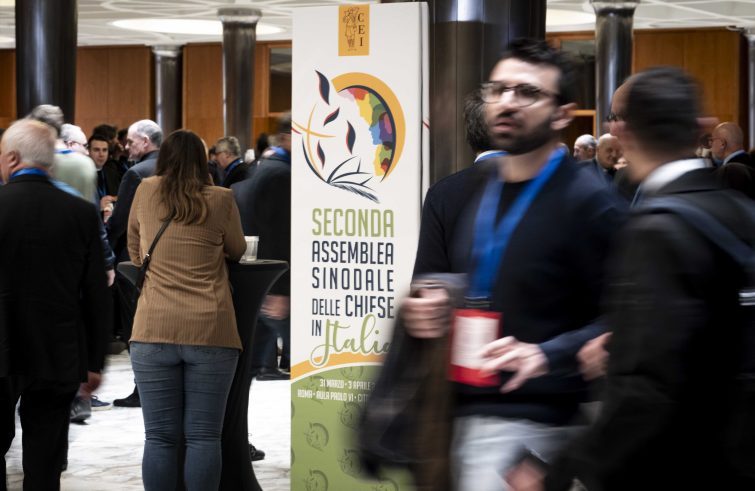
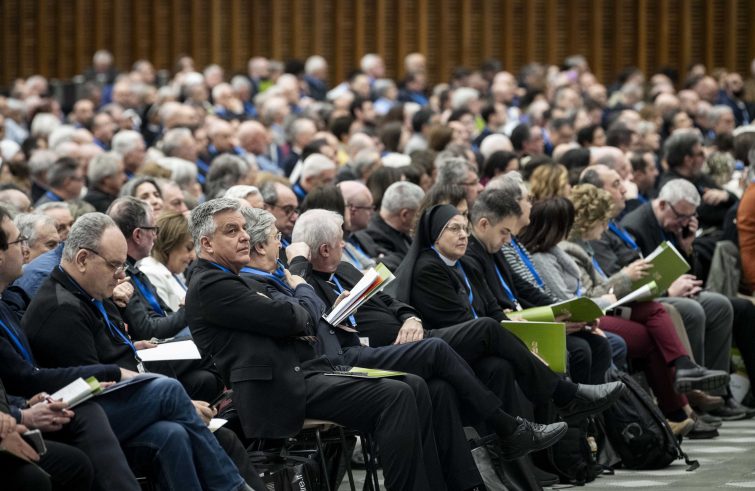
More than a thousand delegates from all over Italy, 168 bishops, 7 cardinals, more than 500 lay representatives, including 277 women. These are the figures for the Second Synodal Assembly of the Churches in Italy, held in Rome from 31 March to 3 April. Listening and dialogue characterised this important stage in the Synodal Journey. Yet there was talk of “rejection” and “rebellion”. SIR interviewed the director of the National Office for Social Communications of the Italian Bishops’ Conference, Vincenzo Corrado on this subject.
At the end of the Assembly and its postponement to 25 October, several news outlets reported that the final document had been “rejected” or that there had indeed been a “rebellion” by participants in the Assembly meeting against the CEI leadership. What is your response to critics who read the Synodal Assembly through the lens of conflict and confrontation inside the Church?
A Synodal Assembly is not a political party conference where opposing currents emerge, nor is it a gathering of majorities or minorities; there are no similar or comparable situations. In fact, the Pope has consistently reminded us that “the Synod is not a parliament.” To interpret the proceedings of the last few days through the lens of conflict is preposterous. The problem, as always, is the perception of reality and the resulting narrative.
In fact, there was no form of “rebellion” whatsoever – not least because I can’t see who they could have rebelled against: the numbers of the Assembly’s composition speak for themselves.
Indeed, the Assembly was marked by an atmosphere of mutual listening and prompt decision-making. And while everyone is free to see things as they wish, these are the facts.
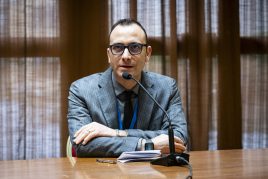
Monsignor Castellucci described the Assembly as “dynamic”, “critically aware, loyal and passionate about the Church.” In view of the role of ecclesial communication, how important do you think it is to counter the idea of conflict and highlight the deeply spiritual dimension characterising these past days?
It is extremely important. We are not used to listening, which does not mean accepting a standardised and conformist line of thought. It means to listen in order to understand the other person’s point of view and to enter into a profound relationship based on reciprocity. The Synodal Assembly was paradigmatic in this respect.
In the plenary sessions and in the working groups, this spiritual dimension emerged clearly, both in the themes addressed and in the identified priorities for pastoral ministry. At a time when everything is perceived in terms of conflict and opposition, this sends out an extremely important message. The Church is very much alive, dynamic and – I would add – brimming with vitality.
During the concluding briefing, you described the decision to postpone the General Assembly as “exceptional” and “mature.” What does this mean for the quality of the ongoing synodal process and how does the Italian Bishops’ Conference intend to support it in the coming months?
The Italian Bishops’ Conference participates fully in the synodal process. And it couldn’t be otherwise. What is the CEI? Its Statute clearly states: “It is the permanent union of the Bishops of the Churches in Italy…” (Art. 1), which “promotes [inter alia, Ed.’s note] concerted action and collaboration among the particular Churches in order to enable them to carry out their mission more effectively” (Art. 3). In recent years, the Synodal Journey has traversed the roads and paths of the Christian communities throughout the national territory, promoting collegiality and, indeed, synodality. It has de facto put into practice the aspirations of the Universal Synod, which focused on synodality as the style of a community-based, participatory and missionary Church. For this reason, the bishops’ decision to postpone the Assembly from May to November, precisely because of the exceptional nature of this decision, reflects their desire to make the most of the synodal journey that involves all our Churches.
How so?
The May Assembly has been held annually since 1976. Only on rare occasions has the date of the Assembly been changed, and only when it conflicted with other important ecclesial events. In 2005, the National Eucharistic Congress in Bari was scheduled for 21-29 May. It was therefore decided to hold it before, in the month of April, but following the death of John Paul II, it was postponed again to 30-31 May. Organising it so close to the Congress was a major challenge. It was an exceptional circumstance, which happened again on two occasions in 2020 (in May and November) during the pandemic: a whole year without a General Assembly.
The Assembly has thus been postponed three times in twenty years. The decision to postpone it is a natural consequence of the choice to convene an additional Synodal Assembly to vote on the Document comprising the Propositions.
This dynamic decision-making process reflects ecclesial communion, not division, and, above all, it reflects pastoral attention to the steps of the Synodal Journey.
-
- (Foto Siciliani-Gennari/SIR)
-
- (Foto Siciliani-Gennari/SIR)
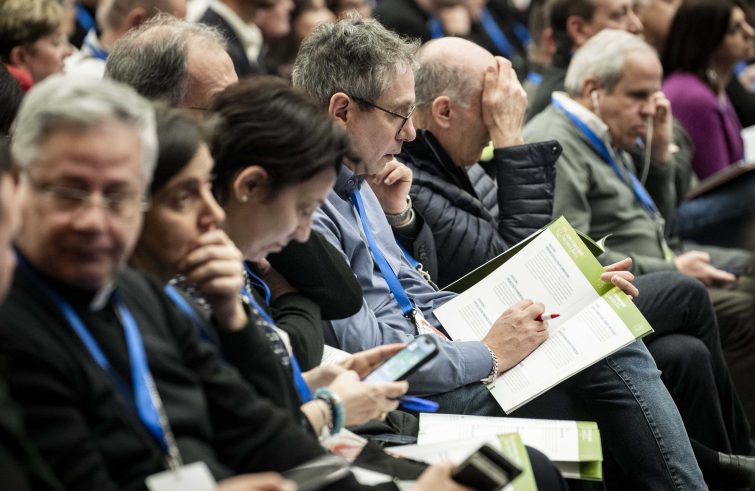
The working groups identified key priority areas such as the formation of adult believers, the role of women, and the accompaniment of young people and broken families. It is fair to say that the postponement of the final document served to better integrate these themes, as opposed to sidelining them?
These priorities are more than just a list or a set of opinions; rather, they describe a journey undertaken so far which will continue in the future. Unless this is taken into account, it is impossible to understand the process underway. Voting and approving a document is not the conclusion of the process, nor is it the end of it. In fact, it is a starting point: the proclamation of the Gospel to the men and women of our time. A renewed missionary commitment to the contemporary concerns and concrete realities of people’s lives, whatever their circumstances, is paramount. This is the teaching of the Second Vatican Council (cf. Gaudium et Spes).
The postponement to October will undoubtedly allow for greater attention to and integration of the amendments and observations, while sharing the phase of reception that will inevitably coincide, as it has in recent years, with that of the Universal Synod.
This is a Church that lives in full communion with the particular Churches.
What requests would you make to the media, including the Catholic media, to ensure that this significant moment is reported accurately and truthfully?
The Synodal Journey is paradigmatic for our times, thanks to its dynamism and its goal of having a positive impact on the life of the Church for missionary conversion. The motion approved by the Assembly deserves to be carefully read. In one passage it says: “‘During the days of the assembly, a number of themes emerged: experiences, challenges and resources that characterise the life and vitality of the Churches in Italy, with a participatory and responsible approach.” This is what has actually emerged even in the face of difficulties: there were neither divisions nor rifts, but rather a strong spirit of participation and responsibility. I expect the media, especially the Catholic media, to accompany us along the path as it unfolds, reporting all the facts, everyone’s sentiments and the entire journey.