
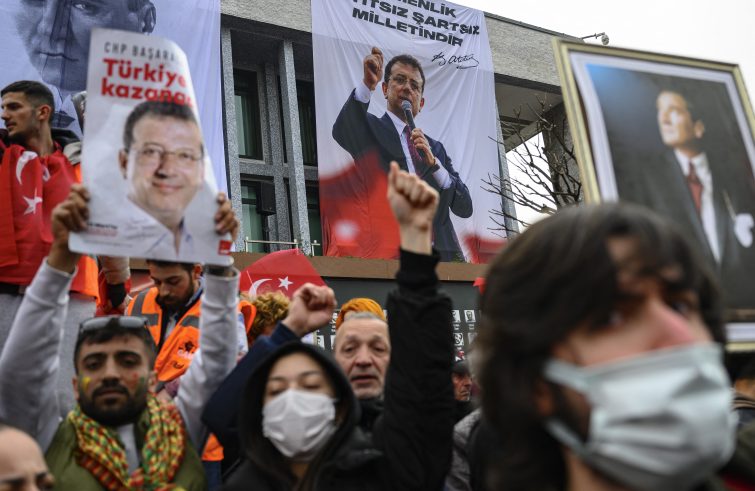
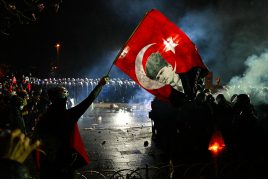
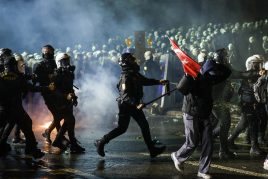
“This is a very serious matter, which will also have to be assessed in the light of future developments. The arrest of the mayor of Istanbul is a serious political move, even if it is the decision of the judiciary, which will have to clarify the nature of the charges.” Carlo Marsili, former Italian ambassador to Turkey from 2004 to 2010 and currently president of the association “Italia-Turchia”, comments on the arrest of Istanbul mayor Ekrem Imamoglu, a leader of the main party CHP. News of his arrest sparked widespread protests in cities across Turkey, with police arresting a number of demonstrators. In a message to his supporters, Imamoglu said the charges were “immoral and baseless accusations” and “cleverly fabricated evidence to stage the investigation with the aim of damaging my reputation and credibility. What is happening tarnishes Turkey’s image on the international stage, undermines public confidence in the judiciary and has a negative impact on the economy.”
“What we do know,” says Marsili, who is also honorary president of the Union of Honorary Consuls and Senior Fellow of the Think tank “Nodo di Gordio”, “is that of the two sets of charges brought against Mayor Imamoglu, one relates to alleged graft involving the Mayor and other members of his party, including three mayors of Istanbul districts who were also arrested. The other involved allegedly aiding and abetting terrorism, but it was dropped. The charge of aiding and abetting terrorism was brought against Imamoglu because he won the last local elections in Istanbul with the votes of a large part of the Kurdish electorate. In particular, he won the support, albeit not openly, of the Kurdish-inspired Peoples’ Democratic Party. A party that is represented in parliament and has every right to support whoever it wants.”
Imamoglu won the nomination as presidential candidate for the 2028 elections in the CHP primaries that were held on Monday. Given the massive turnout, could this be seen as a response to his arrest?
The unprecedented primaries in Turkey saw an extraordinary turnout of around 15 million people, more than a quarter of all eligible voters, confirming their support for Imamoglu. At the moment, the situation is somewhat suspended. On the one hand, the protests are continuing, while on the other, the judiciary continues to press charges against the mayor.
In the light of all this, is there a risk of an autocratic drift? Is Turkey at a crossroads?
The problem with Turkey is that it has always been at a crossroads between democracy and autocracy. Election day in Turkey is a day of freedom. I have participated in many elections all over the country and I can assure you that they are free elections. This does not exclude the fact that a number of measures are in place which we would consider authoritarian from our point of view as a developed democracy, such as the government’s overwhelming control of the media, including the press and television, not to mention the strict control it exercises over public bodies and institutions. This is why the opposition always has to act with extreme caution. But then again, the day of the election is a free day. It’s hard to say at the moment how things will develop in the country. Turkey is not the kind of country where people stage popular uprisings. There have been coups, but I tend to think that continued violence is unlikely in this situation. I expect the charges to go to trial and then we will have to see what happens.
There is another aspect that is hardly mentioned. I am referring to the decision of the Academic Senate in Istanbul, taken on 18 March, the day before the arrest, to annul the university degree of the Mayor of Istanbul because of alleged misconduct. Could this seemingly insignificant piece of information carry enormous political weight?
Indeed it could. The Senate found a series of inaccurate details. This issue came to light after a long time, but it is a fact. It is something serious and it matters greatly because, according to Turkish law, a candidate for the presidency of the Republic must have a university degree. If the Academic Senate’s decision is not overturned, Imamoglu will not even need to be convicted to prevent him from standing in the next presidential election in 2028. Clearly, there is an intense ‘activity’ taking place against a candidate who, until now, was seen as the only one capable of beating Erdogan in the next elections, which will most likely be held at an earlier date. But things could also turn against Erdogan at this point. In other words, even if Imamoglu were forced to drop out as a result of all these incidents in which he is involved, there could still be other candidates who could defeat him, such as the current leader of the opposition CHP party, Ozgur Ozel, or the mayor of Ankara, Mansour Yavas, who is also a member of the CHP.
Erdogan has been in power for 22 years and, according to various commentators, he is seeking a way around the three-term limit to run for a fourth term in 2028 by amending the constitution. But could he run again in the event of an early vote?
Under the Turkish presidential constitution in force, the office of the President is subject to a three-term limit, so Erdogan cannot run again in 2028. However, according to the Turkish constitution, he could if there were early elections. Therefore, it is widely believed that he intends to call early elections. For this to happen, a parliamentary vote could be the way forward, but this requires a qualified majority. An even larger majority is needed to change the constitution. Erdogan is currently unable to change the constitution with the votes he has in parliament. However, early elections may be possible.
In view of the fact that the Turkish economy was already in a precarious state, what impact has the arrest of Imamoglu had on the economy?
The street protests have weakened the Turkish lira and the country’s overall economic situation is deteriorating. Many households in Turkey are now finding it difficult, and in some cases impossible, to make ends meet. The Turkish people are very resilient, they don’t complain and they get by without too much hassle. But it is hard to say how long this situation will last. Resolving it is not going to be easy.
These tensions, which are causing great internal instability in Turkey, come at a difficult time on the international stage. Turkey has a “diplomatic” involvement in ongoing conflicts like the Russian-Ukrainian conflict and in troubled regions like the Middle East. It also has the second largest standing army in NATO, of which it is a member…
Whatever the outcome, this situation is a source of great instability on the domestic front. Conversely, a “stable” Turkey on the domestic front would have significant repercussions, especially in the current international context, rife with turbulences everywhere. I’m referring to the war between Russia and Ukraine, the conflict in the Middle East and the tension surrounding NATO. In this respect, Turkey could play an important role. But it should also be remembered that Turkey has always been divided between those who are for Erdogan and those who are against him. This divide is comparable to the divisions in the United States and other countries, but in Turkey it runs deep. There has been no dialogue between the involved parties, of any kind, and this means that Turkey is condemned to permanent instability. Of course, it is a controlled instability with few negative repercussions on the international stage, on the contrary. In fact, in recent years, Turkey’s foreign policy has been relatively balanced. The problem is that this instability is likely to become more pronounced, and this is most unfortunate.