
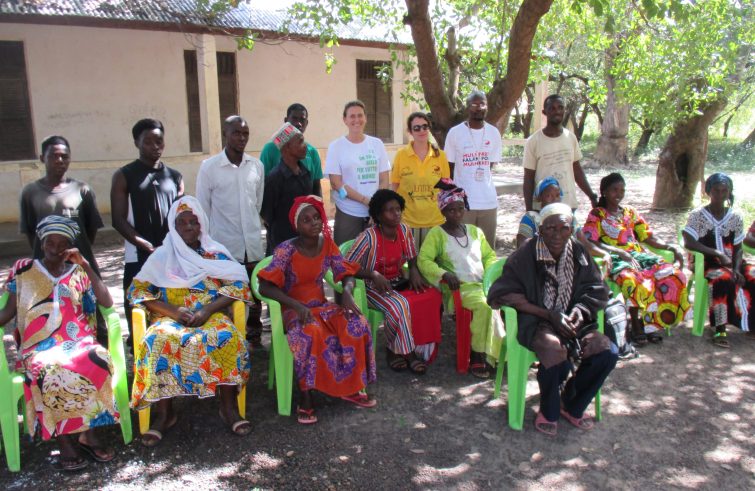
Sunday 26 January marks the 72nd World Leprosy Day, founded by Raoul Follereau. In Italy, the initiative is sponsored by the Italian Association of Friends of Raoul Follereau (AIFO), which for over 60 years has been at the forefront of the global effort to eradicate leprosy and guarantee everyone’s right to health care and inclusion. On the occasion of World Leprosy Day, AIFO is planning various initiatives throughout Italy to inform and raise awareness of this disease, which, although curable, is still a major health problem in several countries in Africa, Asia and Latin America, where persistent poor socio-economic conditions facilitate its spread. Hundreds of AIFO volunteers will gather in squares and parishes throughout Italy to distribute the “Solidarity Honey” and the “Good Health is a Right” kit, the proceeds of which will be used to finance AIFO’s social and health projects throughout the world, in particular those aimed at combating leprosy. AIFO is supported by the Agesci, Gifra, Sism associations and several dioceses, under the high patronage of the President of the Republic.
The theme chosen by AIFO for the year 2025 is the unifying aspect of embracing.
The slogan, “The sick only heal when they are embraced”, highlights the centrality of the person and not the disease.
It emphasises the importance of inclusion, care and support for the sick, starting with people affected by leprosy and all those on the margins of society. Although leprosy appears to be a distant disease from a Western perspective, it remains a public health challenge in a number of countries around the world. Today, leprosy is a Neglected Tropical Disease (NTD) on the WHO list. People affected by leprosy have been subjected to exclusion and stigma that leaves them vulnerable to destitution and disability.
A total of 182,815 cases of leprosy were recorded globally in 2023, representing a 5 per cent increase over the previous year,
according to the WHO’s latest annual report on global leprosy, published in September 2024. The majority of people diagnosed live in three countries: India, Brazil and Indonesia. Among the new cases, 5.7% are children (under 15 years), while 39.9% of global cases are women.
In 2023, 5.3% of those diagnosed suffered severe disability, 2.7% of which were children.
AIFO’s projects are in line with the WHO Roadmap for Neglected Tropical Diseases 2021-2030, which in turn complies with the Global Leprosy Strategy 2021-2030 “Towards zero leprosy”.
The path to a leprosy-free world requires integrated action to achieve the “three zeroes” goal: Zero Transmission, Zero Disability and Zero Stigma.
Moreover, scientific research is of paramount importance. According to Giovanni Gazzoli, AIFO MD and an expert in tropical diseases, “the road to achieving zero leprosy involves the promotion of scientific research by building consensus on the research priorities of the global community including the development of a vaccine, which is currently in its final testing phase, and the identification of new drugs, such as the Telacebec leprosy programme, which is also supported by AIFO.”
In addition to raising awareness and disseminating information, AIFO promotes a multi-sectoral approach that includes rehabilitation and socio-economic reintegration of people with disabilities caused by the disease, including their families. “AIFO is mainly active in countries where rights, let alone opportunities, are non-existent. Our mission, however, is to make people aware of their rights, both human and social, and to persistently seek conditions for growth and autonomy, to demonstrate to the most vulnerable that they too can succeed”, said AIFO President Antonio Lissoni. He added,
“This is the meaning of World Leprosy Day: health care, education, but not only; above all, the ability to create opportunities so that those who have never felt treated as human beings finally will, capable of managing their own lives.”
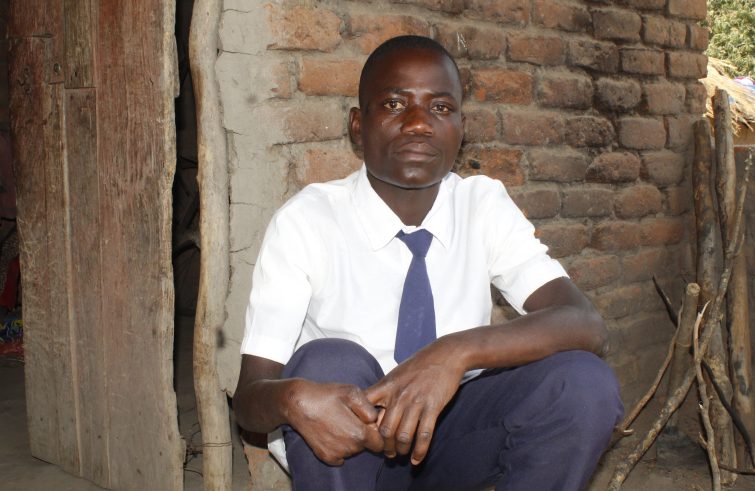
AIFO met Dario, whose life has been scarred by leprosy, in Mozambique, ranked 183 out of 193 poorest countries in the world. Dario is 18 years-old. He lives in a small village in the province of Manica. Seven years ago, he contracted leprosy, which left scars on his face, on one eye and both hands, leaving him facing isolation and stigma. Fellow students shunned him, forcing him to leave school for three years. The disease is not only physical: exclusion and social stigma leave deep wounds in the psyche of those affected. Dario was diagnosed in time and, thanks to the support of AIFO, has embarked on a path of healing and hope.
Today, he is rewriting his own destiny: having resumed his studies, he has taken a course in hairdressing and is now in a position to earn an income and gradually become more independent.
His parents died and he lives with his grandparents. He dreams of a future where he can take care of himself and where he can fulfil his own plans.
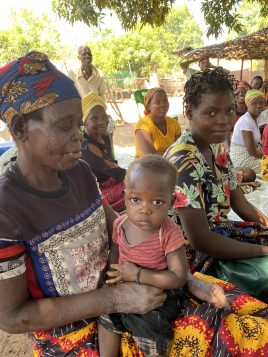
The province of Nampula in Mozambique is the worst affected by leprosy. This is where the Nikahianeke Group – which means “together for mutual help” in the Macua language – was founded. The group is made up of 14 women with extraordinary lives. They proudly cultivate a plot of land that allows them not only to feed their families, but also to sell their produce and buy basic necessities. Among them is Julieta: she has overcome leprosy, which she contracted as a child, and is now a grandmother. She is shy, but well integrated into the community. She lives with her four daughters. The eldest daughter has a little boy who is very fond of his grandmother. Julieta discovered that she had leprosy when she was a child. Unfortunately, the diagnosis came too late and so did the cure. Today, Julieta is blind in one eye and has a disability that affects her hands and legs. For a long time, Julieta’s disability made it difficult for her to take care of herself and her daughters. However, thanks to the treatment and care she continues to receive today, she has regained her independence and is able to do small jobs in the fields managed by the mutual support Group, earning a living for herself and her daughters. She would not have been able to cultivate a field on her own, but thanks to the women’s group she can provide food for her family and earn some money from the sale.
Today, Julieta is serene. She has a productive life, a life that, as she says, “benefits myself and others.”